

In the wind ☼
34.122889, -116.266333

“Still I let divine will/fill me like a windsock,”1
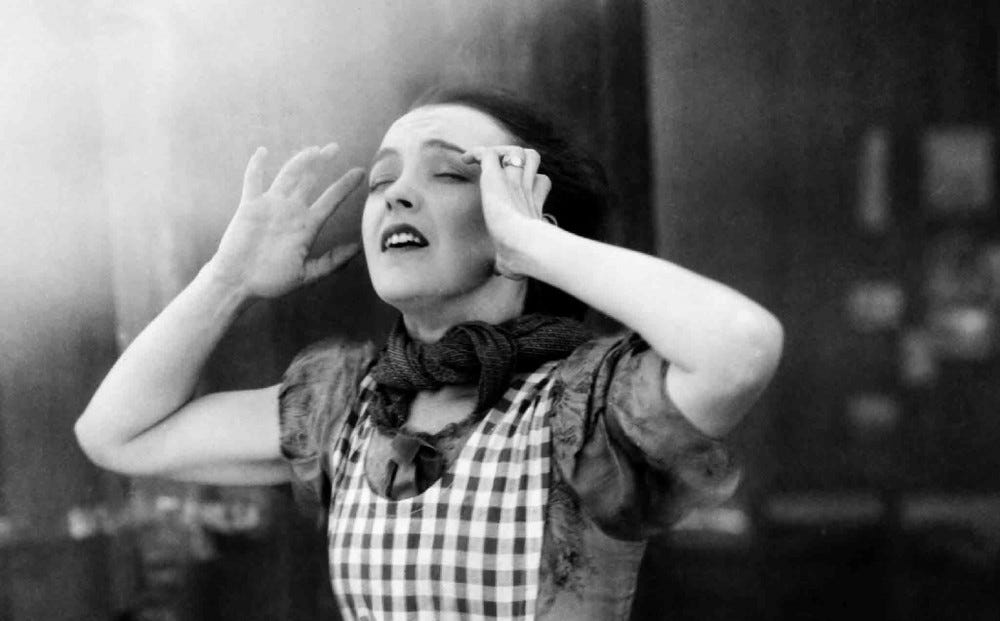
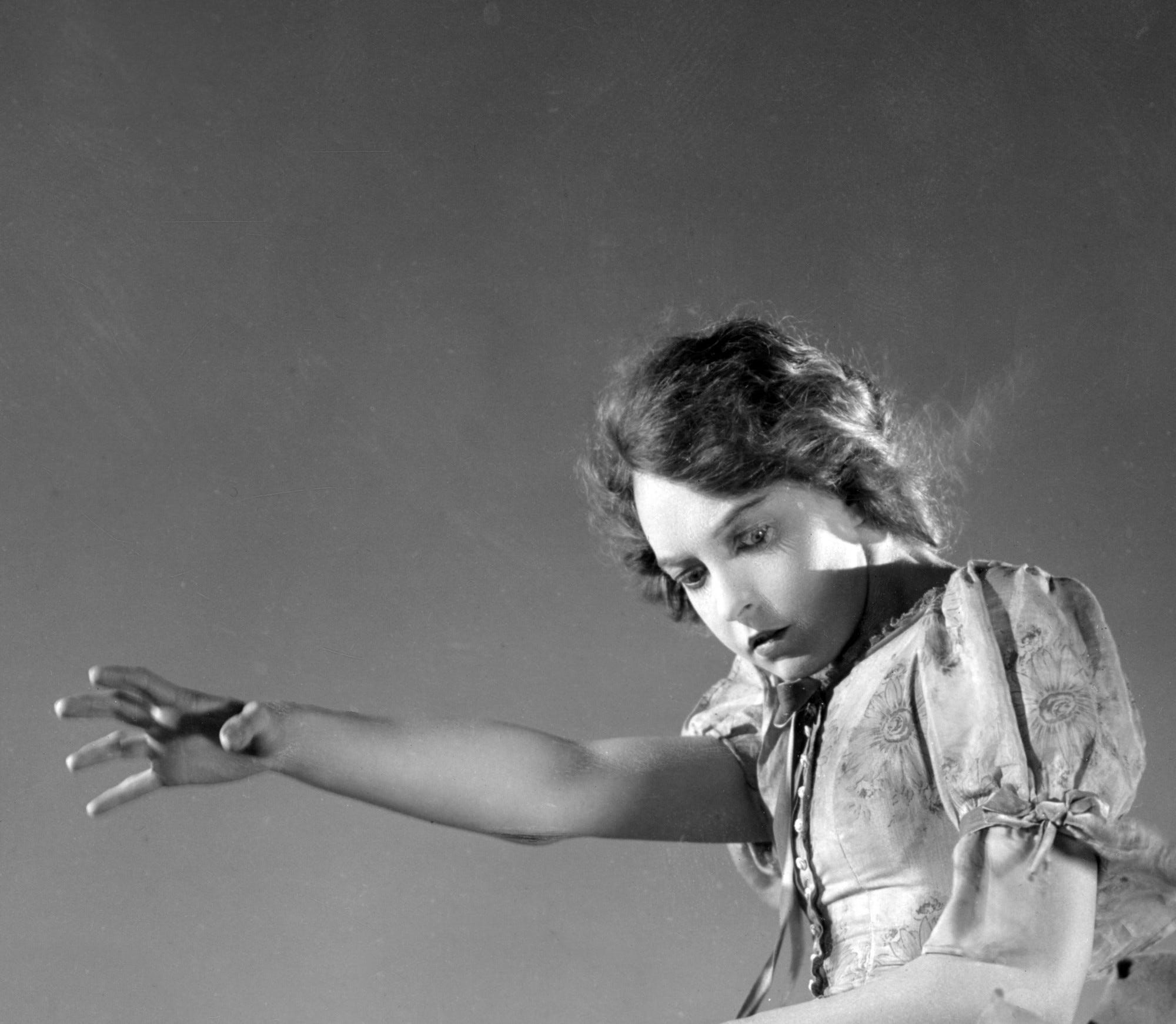
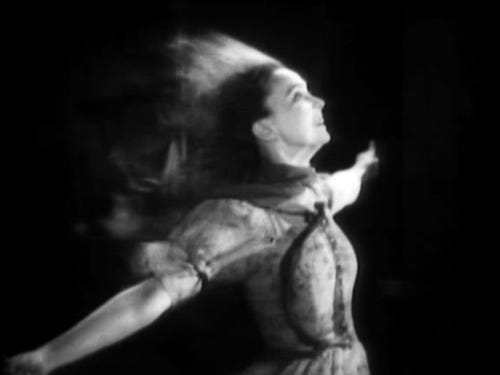
In the 1928 silent film, The Wind, a young eastern transplant finds herself destitute and headed west where she is tortured by the incessant winds of West Texas. One of the opening intertitles refers to the over-plowed prairie as the “domain of the winds” at the onset of the Dust Bowl. The film follows the woman deeper and deeper west as men chase her and winds assail her. A similar tack is surfed by Joan Didion’s essay on the Santa Anas, an it girl favorite (despite the concept possibly being pulled from this film), in which she conflates rising crime rates and murderous housewives to the phenomenon of the Foehn winds that blow leeward down our eastern mountains and across southern California. Makes sense that The Wind was filmed in the pits of the Mojave, not the prairie, in hundred degree Fahrenheit heat and airplane propellers were used to create the ever-present dust storms the heroine faces. I hated the ending which diverged from the book—the latter featured the young woman accepting her fate and merging with the wind itself, leaving the lean-to shelter one proposing man after another dragged her to and burying herself alive. These wind storms, called “Northers” by cattleman and cowboys personify desire and Western precarity, some obnoxious film bro Letterboxd reviews equate it with the danger of frontier living itself but I found this too on the nose and low key, feeding directly into the propaganda of the era. Women couldn’t survive the frontier under this narrative but in Dorothy Scarborough’s literary version, women are nature themselves, afraid of nothing.
What also struck me was how prescient The Wind was regarding the Dust Bowl which historians mark as hitting full force between 1930 and 1941. In the film and the public imagination, the “land of the winds”—i.e. the mythic West (which was considered first, the prairie during Western Expansion) serves as the domain of rugged individuals and dangerous itinerants, let alone a delicate woman from the Eastern seaboard. To me it seems that the gale forces in The Wind form a sibylline metaphor for the violent wave of migration that would push Okie settlers, intent on escaping the misery of the prairie, further west, merging Puritan impulses with the longing for pure air during an era of labored breath—from tuberculosis, to “gassed” men suffering from lung damage after WWI, to the discovery of Valley Fever, to pollution from industrialization—nature cleaned and purified of toxins as a type of religious fetish.2 I somehow never learned that the Dust Bowl was completely avoidable, that it was a human-made ecological disaster only undone by socialist-leaning New Deal regulations and subsidies. How it wasn’t some freak occurrence or an act of God, but a result of an over-extractive system. I have a theory about flipped desert houses, vacation rentals, and a contemporary social Dust Bowl, but I’ll save that for another day.
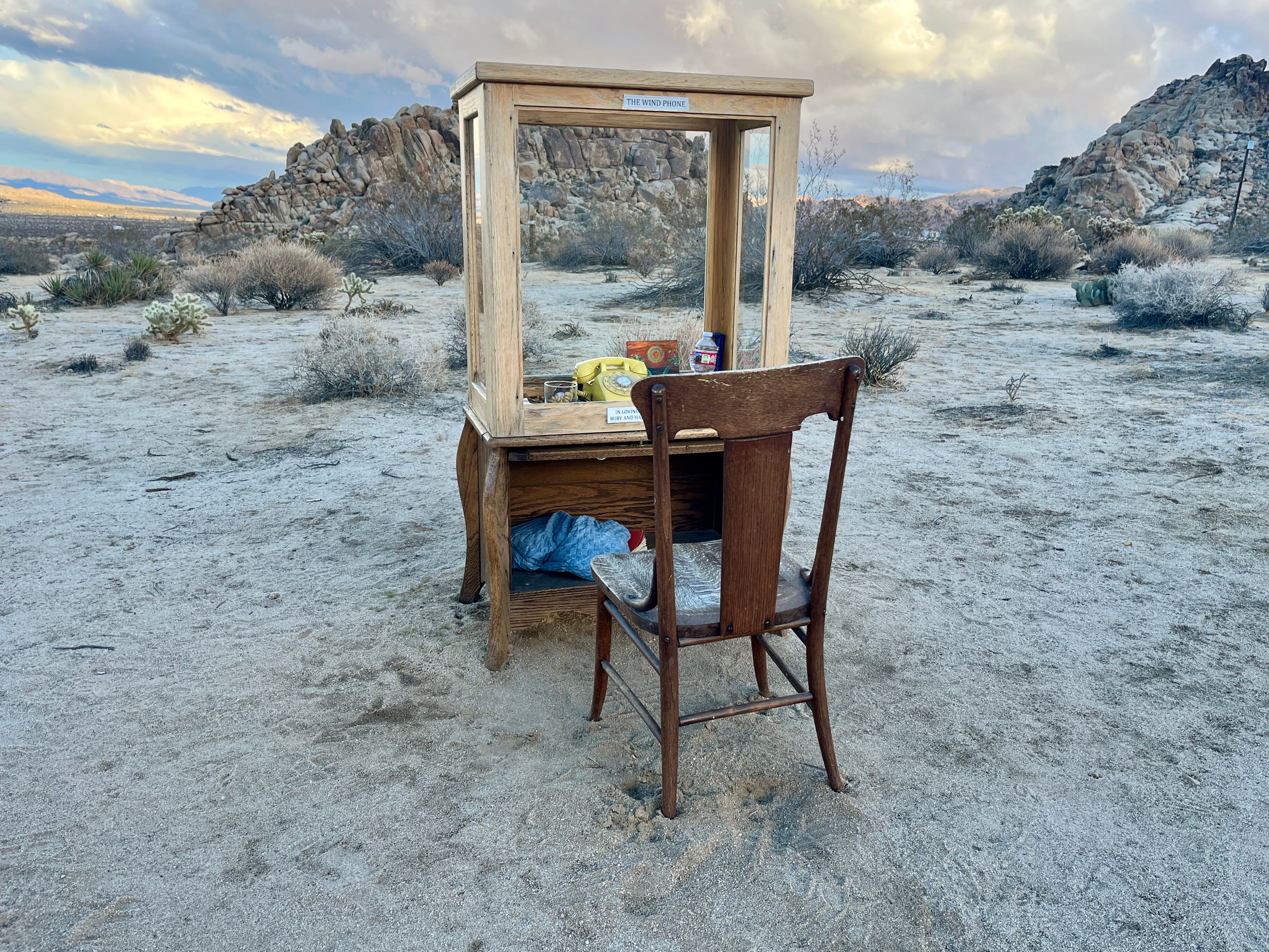
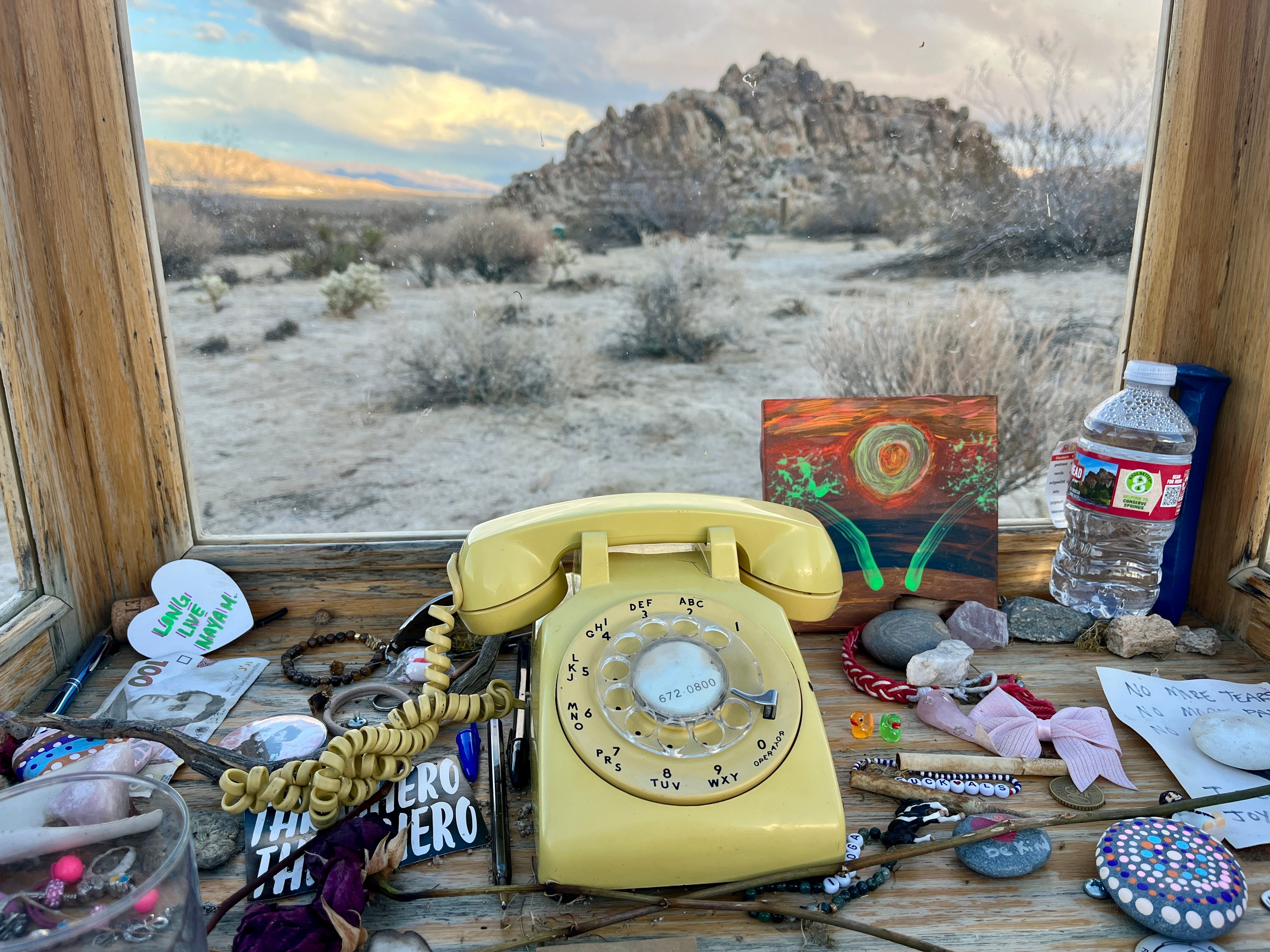
Last week I took a quick drive down the 62 to visit the Campbell Wind Phone in Joshua Tree. Created by locals Colin Campbell and Gail Lerner in dedication to their children, Ruby and Hart, who were killed in a drunk driving accident in 2019, the Campbell Wind Phone sits waiting for anyone who needs to make a phone call to a loved one who is no longer with us. “We miss and talk about them every day,” reads their website. “We talk to them as well, but there are days when they feel so far away it’s hard to imagine our words reaching them.” Inspired by the original wind phone, assembled in Japan by Itaru Sasaki who, while grieving his cousin, bought an old fashioned phone booth, installed it in his garden, and placed in it a broken rotary phone with no wired connection. Sasaki called it Kaze No Denwa (風の電話), or Wind Phone.
I believe that the wind carries messages and spirits. The year my great granny died at age 95, I found myself in Joshua Tree on my hands and knees in the dust, creating a small medicine wheel out of rocks, just as she had taught me as a child. She was fierce, spooky, and with formidable hospitality, a legend in her own right. When I placed the last stone, a wind rushed me and nearly knocked me over. When I texted my Grandmama what had happened she said, “That was her, no doubt. She was saying hello back.”
After a friend sent me a link with the directional coordinates to the Wind Phone, I hopped in my car almost immediately to make a quick call. I didn’t think to call my granny because I knew she was already there in the desert with me most of the time. So before the sun set and in crisp wind, I sat and dialed my friend Alan, who passed in 2023, and I told him how the Dodgers had won back-to-back World Series—something he’d be absolutely thrilled by—since he left our earthly plane. A desert altar of sorts, of which there are many along the back roads of the Mojave and other desert cities, the Wind Phone is a reliquary worth a pilgrimage, even if you have no one to call.
I’m reading:
This essay, My Truck Desk by Bud Smith altered my brain chemistry. “Really it mostly comes down to that first thing: finding time. When I talk to people who want to find more time, I repeat something an old-timer said to me early on: ‘You’ve gotta make your own conditions.’” One’s own conditions. I also also recently heard about a painter who worked as a trucker until Hilton Als reviewed his exhibition and his career took off before he could start nursing school (which he had chosen as his new career path). There is incredible dignity in doing art part time, to value all labor as equal instead of putting yourself at the mercy of the market as a creative person. It’s brutal! I’d rather be doing mindless tech stuff for $150 an hour!
I’m amidst a career shift. Writing full time freelance was a dream I held and achieved within the first five years of trying it out. I feel accomplished and proud but I was also constantly broke and frazzled. I had no real schedule, I was on press trips every other month, and while that ragged lifestyle suited me into my thirties, I found myself wondering how my nervous system might feel if I had a consistent income and schedule, what it might feel like to go to an actual office. I looked around at my other creative friends. What does continuity feel like? Living in one city for longer than three years?
So I made a decision without ruminating—something I gleaned from my guru, Doechii—and for the last six months, I’ve been in paralegal training with the plan of working in the legal field, which is not unlike journalism or reporting. When my painter friend Bruna asked me how paralegal school was going, I told her that I felt like my dreams were dying. “They’re evolving,” she said and I like that better. My dreams are being melted down in some crucible of force and habit. I’m an accountant of my own ambitions and the number sheet is feeling a bit unbalanced.
Not everyone needs to be an artist—I do, I can’t help it, the gods spoke and I moved—but everyone does need to eat and make money and I’ve done so much juggling and struggling and being clever trying to piece everything together, I don’t see why I can’t write, for myself3, part time, rather than pacing in agony writing about subjects I may or may not care about for pittance for magazines that are long past their heydays.4 I’m not sure a. when I’ll land an entry level job in this absolutely cursed job market or b. how I’ll balance time off for press trips (I refuse to give them up!) but I look forward to figuring it out and focusing on writing stories I deeply care about and that serve my ambitions. I could discuss writing and money all day but it’s been done better and by greater writers than I.
Someone cribbed my signature sun icon (☼) this month for some goofy design project, a woman who often steals from me. It wouldn’t bother me but I know she knows I use it here and have since 2019. I see you girl, I’m petty, stop stealing my shit! It’s been three times now! And you’ve made MONEY from it! You know who you are!
Editors, this is a grammar free zone, please don’t copy edit mentally, it’s bad up there. Unless you’re offering and in that case, I could use the help.
And to the rest of you: Thank you again for reading! May your haters be vanquished and may the wind carry you along. ☼
from “Poshmark” by Erin Marie Lynch
i.e. white supremacy and conquest, this era kick started another wave of indigenous genocide but this sletter (thank you Greta) won’t tackle this history today.
You’d think that freelance writing would mean having time to write about your own stuff but that simply has not been the case. I DO write about things I research but they took up more brain-space than I imagined and I end up writing my own personal projects on the weekend so I may as well be making more money in an industry that isn’t dying!!!
For the record, I love every magazine I’ve ever written for, even the ones that no longer exist (of which there are many).